

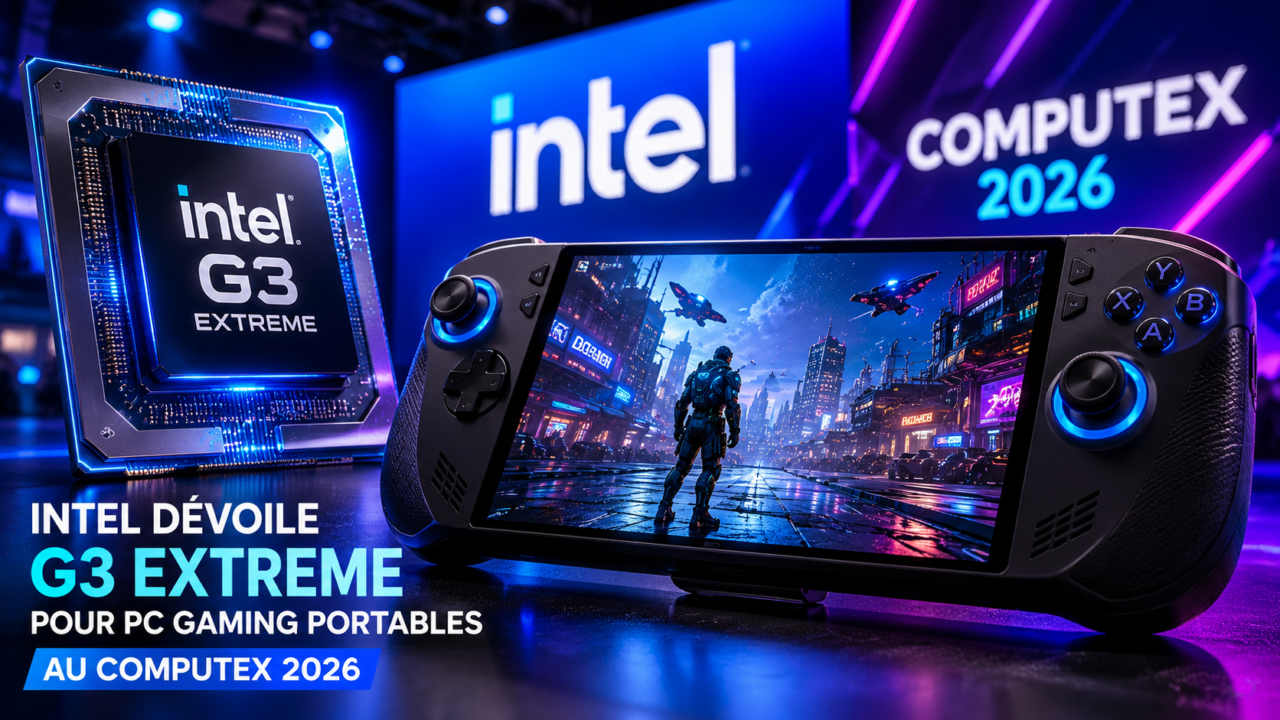
Handheld gaming PCs are taking another major step forward. At Computex 2026, Intel officially introduced its new G3 Extreme chips, designed for future high-end handheld gaming devices. Following the launch of the Panther Lake architecture at CES 2026, this announcement confirms Intel’s ambitions in the next-generation portable gaming market.
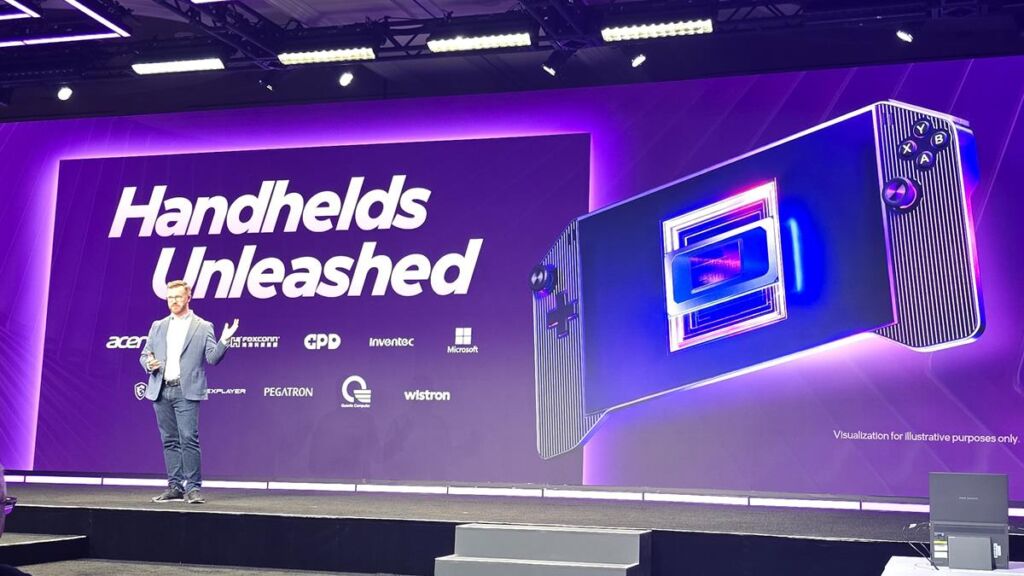
Intel G3 Extreme: A Powerful Chip for Handheld Gaming PCs
The new Intel G3 Extreme chip features:
- 14 CPU cores
- An integrated 12-core Arc B390 GPU
- A base clock speed of 2.3 GHz
- Support for XeSS Multi-Frame Generation technology
According to Intel, this configuration will allow most AAA games to run at low-to-medium settings while achieving over 60 FPS in several recent titles.
The integrated GPU is based on the same graphics architecture found in some recent Panther Lake laptops, which could significantly improve power efficiency compared to previous generations.
Acer Predator Atlas 8: The First Handheld Powered by G3 Extreme
Among the first confirmed devices, Acer unveiled the Predator Atlas 8, a handheld gaming PC that will feature the Intel G3 Extreme processor.
The announced specifications include:
- 24 GB of RAM
- A 1200p display with a 120 Hz refresh rate
- A 1 TB SSD
- A premium gaming-focused design
No official price has been announced yet, but its premium positioning suggests that the device will be relatively expensive, especially following the recent price increases of the Steam Deck.
Intel Aims to Challenge AMD in the Handheld Gaming Market
For several years, AMD has dominated the handheld gaming PC segment with its Ryzen Z-Series processors. Devices such as:
- ROG Xbox Ally X
- Lenovo Legion Go 2
have helped popularize portable Windows gaming.
However, performance gains between generations have remained relatively modest. Intel hopes to change that with a modified version of its Panther Lake architecture specifically optimized for handheld gaming devices.
Better Battery Life for Handheld Gaming PCs?
One of the biggest challenges facing handheld gaming PCs is battery life. AAA games consume significant amounts of power, and many devices struggle to deliver more than 90 minutes of intensive gameplay.
Thanks to the energy efficiency improvements of Panther Lake, Intel could offer substantially longer battery life. If the performance and efficiency demonstrated by Panther Lake laptops carry over to handheld devices, it would represent a significant advancement for gamers on the go.
XeSS and Frame Generation: Higher FPS Performance
Intel is also continuing to improve its software ecosystem. Future handhelds powered by the G3 Extreme will support:
- XeSS upscaling technology
- Multi-frame generation
- High refresh rates of up to 120 Hz
These technologies could deliver smoother frame rates, especially on the high-refresh displays featured in new portable gaming devices.
A New Generation of Steam Deck Competitors?
While it is still too early to fully evaluate the real-world performance of the G3 Extreme, this new generation of chips could accelerate the arrival of more powerful and energy-efficient handheld gaming devices.
Intel’s announcement has also reignited speculation about a potential Steam Deck 2, a device that many gamers have been eagerly awaiting for years.
The coming months will be crucial in determining whether Intel can truly disrupt the handheld gaming PC market, which has so far been dominated by AMD and Valve.