
Xbox Project Helix Could Change More Than Just Microsoft’s Next Console
Microsoft has started talking more openly about Project Helix, its next-generation Xbox hardware, and the message is already clear: this is not supposed to be just another normal console refresh.
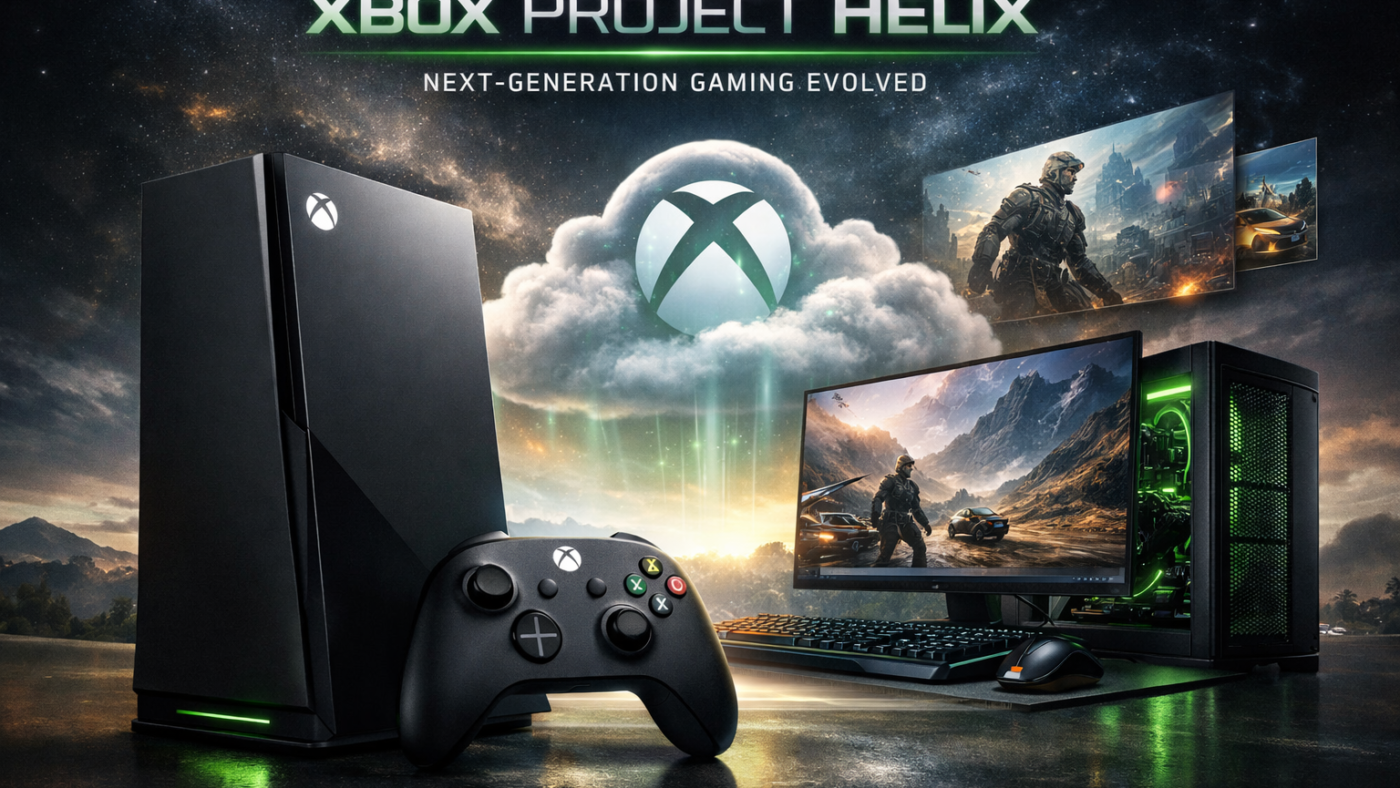
During GDC 2026, Xbox confirmed that Project Helix is being built as a new first-party console designed to play both Xbox console games and PC games. That detail alone makes it one of the most important Xbox announcements in a long time, because it shows where Microsoft is really heading next. The company is no longer treating console and PC as two separate worlds. Instead, it wants them to feel more connected, both for players and for developers.
This is also why Microsoft keeps linking Helix to its wider Windows gaming push. In the official Xbox Wire announcement, the company described Project Helix as part of a larger next-generation strategy. That strategy is not only about graphics power. It is also about making the Xbox experience work more smoothly across devices, screens, and storefront habits that already define modern gaming.
A Different Kind of Xbox Plan
For years, Microsoft has been moving in this direction step by step. Game Pass expanded the idea of the Xbox ecosystem. Xbox Play Anywhere made it easier to buy once and play across devices. Cloud gaming pushed the same idea even further. Project Helix looks like the hardware version of that long-term strategy.
According to Xbox, the new system is powered by a custom AMD system-on-chip and is being co-designed around the next generation of DirectX and FSR. Microsoft also says Helix will deliver a major leap in ray tracing performance, which tells us this machine is being positioned as a real next-gen platform, not a small mid-cycle upgrade. The company used ambitious language here, but the bigger takeaway is simple: Microsoft wants Helix to feel premium, modern, and flexible at the same time.
That flexibility is what really stands out. A traditional console usually offers a closed ecosystem with a clear boundary. Helix seems built to blur that boundary. If Microsoft delivers what it is promising, the next Xbox could feel less like a box you buy for one platform and more like the center of a wider gaming system that includes console, PC, and cloud.
Why PC Matters So Much This Time
One of the strongest signs of Microsoft’s direction is the way it now talks about Windows in the same breath as Xbox. The company confirmed on the Windows Experience Blog that Xbox mode will begin rolling out to Windows 11 in select markets starting in April. That feature brings a full-screen, controller-friendly Xbox-style interface to Windows while keeping the openness of the PC platform.
On its own, that might sound like a simple software feature. In reality, it says a lot about where Helix is heading. Microsoft is trying to make Windows feel more natural for players who want a console-like experience, while also making Xbox feel less isolated from the PC side of its business.
The company also explained on the Microsoft developer gaming blog that Xbox mode is meant to reduce storefront friction, make navigation easier with a controller, and help players jump into games faster. That sounds small, but it matters. One of the biggest advantages consoles still have over PCs is convenience. Microsoft clearly wants Helix and Windows to share more of that convenience.
What This Means for Players
For players, Project Helix could be exciting for a few very practical reasons. First, there is the promise of stronger hardware. Better ray tracing, machine-learning-assisted graphics features, and a tighter partnership with AMD all point to a system built for modern visual tech from day one.
Second, there is the ecosystem side. Xbox says the Xbox Play Anywhere catalog now includes more than 1,500 games. If that momentum continues, Helix may end up being less about forcing players into a single box and more about letting them move between different ways of playing without losing access to their library.
Third, Microsoft says it remains committed to backwards compatibility across four generations of Xbox. That is a major point in its favor. Players care much more about preserving their purchases than they did ten years ago, and Microsoft knows that. The company also teased new ways to play some of its older iconic titles later this year, which could be a big draw for long-time Xbox fans.
The Catch: This Is Still Early
There is one important reality check here: players should not expect Project Helix soon. According to Microsoft, alpha hardware will start going out to developers in 2027. Reporting from The Verge added more context by highlighting that Microsoft sees PC as an increasingly important part of Xbox and wants developers building for Windows and Xbox in a more unified way.
That is exciting, but it also means this platform is still in an early stage. Microsoft has given us direction, not a full consumer reveal. There is no final launch date, no retail pricing, and no full list of launch features yet. So while the vision is interesting, there is still a lot the company has to prove.
Can Microsoft Keep Xbox Feeling Like Xbox?
This may be the biggest question around Project Helix. The closer Xbox gets to PC, the more Microsoft has to protect what people still like about consoles. Players want flexibility, but they also want simplicity. They want performance, but they also want consistency. They want access to more games, but they do not want a messy experience.
If Helix ends up feeling like a premium Xbox machine with smoother access to PC-style benefits, Microsoft could have something special. But if it becomes too complicated, too fragmented, or too dependent on explaining ecosystem theory instead of delivering a clean player experience, some console users may lose interest.
That is why the next phase matters so much. Microsoft has the vision. Now it needs to show that the final product can still feel focused, easy to use, and clearly worth buying.
Final Thoughts
Project Helix is one of the most interesting Xbox stories of 2026 so far because it says a lot about Microsoft’s future. This is not just a next console with more power. It is a sign that the company wants Xbox to sit at the center of a wider gaming ecosystem that includes PC, Windows, cloud, and long-term library access.
That idea makes sense in today’s market, where players already move between devices more than ever. The challenge for Microsoft is turning that idea into hardware that still feels simple and exciting the moment people pick up the controller.
If the company gets that balance right, Project Helix could become much more than the next Xbox. It could become the clearest version yet of what Microsoft thinks gaming should look like over the next decade.