
Nintendo Switch 2: What Gamers Need to Know in 2026
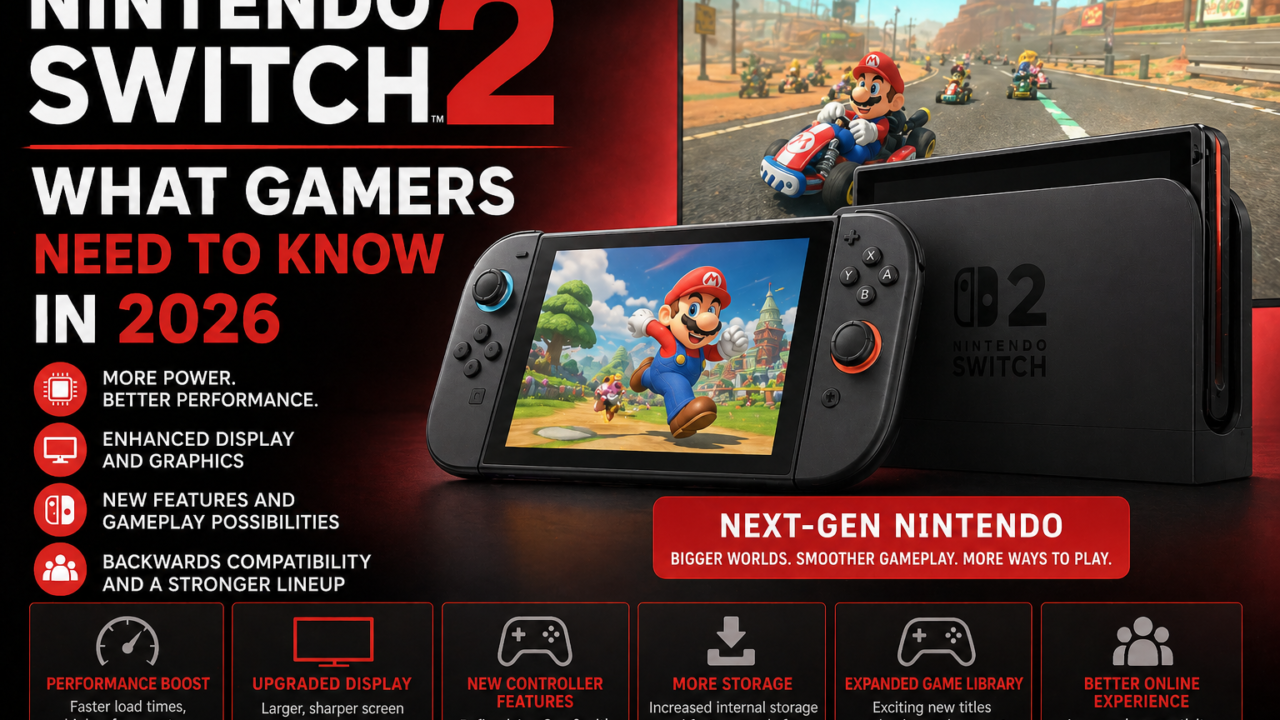
The gaming landscape of 2026 is defined by a single, seismic shift: the full maturation of the Nintendo Switch 2 ecosystem. After years of speculation, leaks, and industry rumors, the platform has firmly established itself as the center of gravity for both handheld and hybrid gaming. If you are still weighing the jump to Nintendo’s latest hardware or simply want to understand how the console is reshaping the industry, you have come to the right place.
In this comprehensive masterclass, we dive into the technical architecture, the library of titles currently defining the platform, and the economic strategy that has allowed Nintendo to remain competitive against the raw power of the PS5 and Xbox Series X|S. Whether you are a casual player or a hardware enthusiast, understanding the Nintendo Switch 2 is essential to grasping the current state of gaming.
The Technical Architecture: Power vs. Efficiency
To understand why the Nintendo Switch 2 remains a dominant force, we have to look past the “4K vs. 1080p” debate that defined the last decade. Nintendo’s strategy for 2026 is built on “Efficiency-Driven Performance.” Using custom-designed NVIDIA architecture—specifically a modified Tegra chip with advanced DLSS (Deep Learning Super Sampling) capabilities—the console punches far above its theoretical weight class.
The magic isn’t in the raw TFLOPS; it’s in the AI-upscaling. By rendering games at a lower resolution and using sophisticated neural networks to reconstruct the image to 4K on your TV, the console achieves visual parity with its “next-gen” rivals while consuming a fraction of the power. This efficiency is what allows for the rich, vibrant handheld experiences that define the library.
Read also: Monster Hunter Stories 3 Release Date: PS5 Launch
Backward Compatibility: The Platform’s Biggest Strength
One of the most critical features that cemented the Nintendo Switch 2 as a success in early 2026 was its seamless backward compatibility. Unlike previous Nintendo transitions, where digital libraries were often lost or locked to specific hardware, the current ecosystem allows users to carry over almost their entire Switch library.
More importantly, Nintendo implemented a “Boost Mode” for legacy titles. Older games—like The Legend of Zelda: Breath of the Wild or Super Mario Odyssey—receive automatic patches that stabilize frame rates, improve texture filtering, and reduce load times when played on the new hardware. This effectively transformed a library of thousands of games into a “Day One” catalog for the new console, a strategic masterstroke that eliminated the “no games to play” complaint that plagues most new hardware launches.
The Library: Defining the 2026 Experience
The Nintendo Switch 2 library has moved beyond the “porting” phase. We are now in the era of native, high-fidelity exclusives that leverage the console’s unique feature set. Key titles like Pokémon Champions and the latest Tomodachi Life: Living the Dream demonstrate the console’s capability for deep simulation and expansive open-world gameplay.
The standout feature for 2026 is the convergence of “Cozy Gaming” and “High-Performance.” Titles that were previously exclusive to high-end PCs are now finding their home on the Switch 2, thanks to the aforementioned DLSS upscaling, which allows for complex, dynamic lighting and physics in titles that were previously considered “un-portably” demanding.
The Handheld vs. Docked Paradox
A common topic in every Nintendo Switch 2 discussion is the disparity between handheld and docked play. In 2026, the gap is narrower than ever. The console utilizes a dynamic scaling engine that ensures a consistent experience regardless of the output display. While the docked experience provides the 4K AI-upscaled visuals, the handheld mode maintains a rock-solid 1080p OLED experience with color reproduction that remains the industry benchmark for portable gaming.
For the average gamer, this means you are no longer compromising on the “intended” experience when you pull the console out of the dock. The experience is consistent, seamless, and increasingly optimized for both form factors.
Competitive Ecosystems: Nintendo’s 2026 Strategy
Nintendo has avoided the “Power War” by focusing on the “Engagement War.” By integrating social features, streamlined online play, and a more robust digital storefront, they have successfully pivoted from a “toy manufacturer” image to a “platform holder” image. The Nintendo Switch Online service has seen a complete overhaul this year, featuring dedicated servers for major multiplayer titles and a refined cloud-save infrastructure that finally rivals the stability of Steam and PlayStation Network.
Read also: Best handheld gaming PC 2026: Steam Deck vs. ROG Ally vs. Legion Go
Essential Resources for Switch 2 Owners
Whether you need technical support, information on software updates, or tips for maximizing your battery life, always refer to these official resources:
- Official Nintendo Switch 2 Hub
- Nintendo Support: Technical Troubleshooting & Updates
- Nintendo eShop: Browse the 2026 Library
Frequently Asked Questions
Is the Joy-Con drift finally solved? The 2026 revision of the Joy-Con hardware features upgraded hall-effect sensors, which have essentially eliminated the drift issues that plagued the original model.
Can I use my old controllers? Yes, the Nintendo Switch 2 supports almost all legacy Bluetooth controllers, including the Pro Controller, making it easy to jump into multiplayer games immediately.
What is the battery life reality? With 2026 firmware optimizations, you can expect between 4 to 6 hours of high-intensity gaming, significantly better than the first-generation handhelds.
Conclusion: Is the Switch 2 Still Relevant in 2026?
As we reach the middle of 2026, the Nintendo Switch 2 is not just relevant; it is essential. By bridging the gap between portability and performance, Nintendo has managed to create a device that appeals to both the nostalgia-driven fan and the hardware-obsessed enthusiast. It represents the perfect equilibrium of the 2020s gaming market.
Whether you’re looking for the best performance in open-world titles or the comfort of a reliable, high-quality handheld, the ecosystem has matured into a powerhouse. As we look toward the remainder of the year and the upcoming holiday releases, it’s clear that Nintendo’s latest hardware isn’t just a console; it’s the standard for hybrid gaming. What is your favorite game on the system so far? Are you impressed by the AI-upscaling performance? Let us know in the comments below!